
Singapore is small, orderly and hot. You can cross it by train in under an hour, and the main danger to your holiday is the sun between noon and four. Learn how a hawker centre works and what the drinks are called, and most of the rest takes care of itself. Any word here you don't recognise is in the glossary.
How the city is laid out
The island is roughly a diamond, about 50km across, and the bit visitors picture is the bottom edge. The CBD sits there: the towers of Raffles Place and Tanjong Pagar, the Marina Bay waterfront, and the old low-rise districts pressed against them, Chinatown, Little India and Kampong Glam. Most hotels are there, and most first-timers never leave it, which is a little bit of a waste.
The east is the long stretch towards the airport: Katong and Joo Chiat with their shophouses and laksa, East Coast Park along the water, Changi at the end. It is where residents go on a Sunday. The north is further and quieter, and the Causeway to Johor Bahru starts at Woodlands. Everything else is the heartlands, the housing estates where most Singaporeans live, each with its own MRT station, mall, wet market and hawker centre. The best meals on this site are mostly in them.
Getting around
The MRT does nearly everything. Six lines, known by colour, the stations clean and air-conditioned. The East–West Line (green) runs the length of the island and has the airport branch; the North–South (red) goes up through Orchard; the Circle (orange) loops the centre; the Downtown (blue) and North East (purple) cut through Chinatown and Little India; the Thomson–East Coast (brown) is the new one and the way to Maxwell, Gardens by the Bay and the east coast. No eating or drinking on board, and no durian at all.
To pay, tap a contactless bank card or your phone at the gantry in and out; the system is called SimplyGo and it charges the fare, nothing more. If you'd rather not use your own card, buy an EZ-Link card at a station and top it up. Buses take the same tap, so there is no reason to buy a tourist pass unless you plan to ride the train for sport.
Taxis are metered and honest, with surcharges at peak hours and late at night. Grab is the ride app and shows the price first; in rain every price goes up and every car disappears, so order before the clouds break. Walking is lovely until 11am and then it is a decision. Residents have a 2pm rule: between noon and four you are in a mall, a museum, a hawker centre or a pool, and you plan the day round it.
Eating
A hawker centre is an open-sided food hall of small stalls, each cooking one or two things, with shared tables in the middle. Walk the stalls before you commit; the long queue is usually right, and an empty stall at 12.30 is telling you something. Find a table and claim it by leaving a packet of tissues on it. This is called chope-ing, everyone does it, and the packet will still be there when you get back. Order at the stall, pay at the stall, carry your own plate. Older stalls take cash and PayNow, a bank QR code you probably can't use, so keep small notes on you. When you're done, put your tray on the return rack; that has been the rule since 2021. Nobody tips, and the whole meal will cost less than your coffee at the hotel.
Drinks come from a separate stall. Kopi is coffee, teh is tea, and both arrive sweet with condensed milk unless you say otherwise. The suffixes do the work: O is black with sugar, C is with evaporated milk, kosong is no sugar, siew dai is less sugar, gao is strong, peng is iced. Kopi C kosong peng is iced coffee with evaporated milk and no sugar, and the auntie will understand you even if you say it slowly.
Dishes to try first, in order: chicken rice, char kway teow, laksa, bak kut teh for breakfast, roti prata for the other breakfast, and nasi lemak if you only have one breakfast. Chilli crab is the famous one; share it, and wear the bib. The Bib Gourmand hawkers are a safe place to start, and the etiquette guide covers the finer points.
Drinking
Alcohol is expensive here. Happy hours are therefore not a gimmick but the way the city drinks: most bars run one into the early evening, and residents arrange the diary around it. The cheap alternative is a bottle of Tiger at a coffee shop, with the football on.
Two rules. Shops and supermarkets can't sell alcohol between 10.30pm and 7am, so buy before then. Drinking in public places is also off during those hours, which includes the beach, the void deck and the bench outside the 7-Eleven. Bars and restaurants carry on as normal.
Money
The currency is the Singapore dollar, written S$ on this site. Cards and phones work nearly everywhere except the older hawker stalls and the wet market, where cash still rules. There is no tipping: not in taxis, not in restaurants, not for the porter, and attempts at it produce confusion rather than gratitude. What there is instead is the ++ on menus, which means 10 per cent service charge and 9 per cent GST added to the printed price. A S$30 main is S$36 by the time it reaches the bill. Hawker centres and coffee shops have no ++, which is one more reason to eat in them.
Manners
- Queue. For everything, in a straight line. A queue is a form of respect here, and jumping one is noticed by every person in it.
- Stand on the left of the escalator and walk on the right. It is the opposite of London and you will get it wrong at least once.
- Shoes come off at the door of a home, and at temples and mosques. If there is a rack of shoes, add yours.
- Durian is not allowed on the MRT, in taxis or in most hotels. The signs are serious and so is the smell.
- Chewing gum: the sale and import have been banned since 1992, but chewing it is not a crime. You won't find it in shops, you won't be arrested for the packet in your bag, and you will be fined for sticking it anywhere.
- Fines for littering, jaywalking and eating on the train are real. The city is clean because the rules are kept, not because the signs are polite.
Your first three days
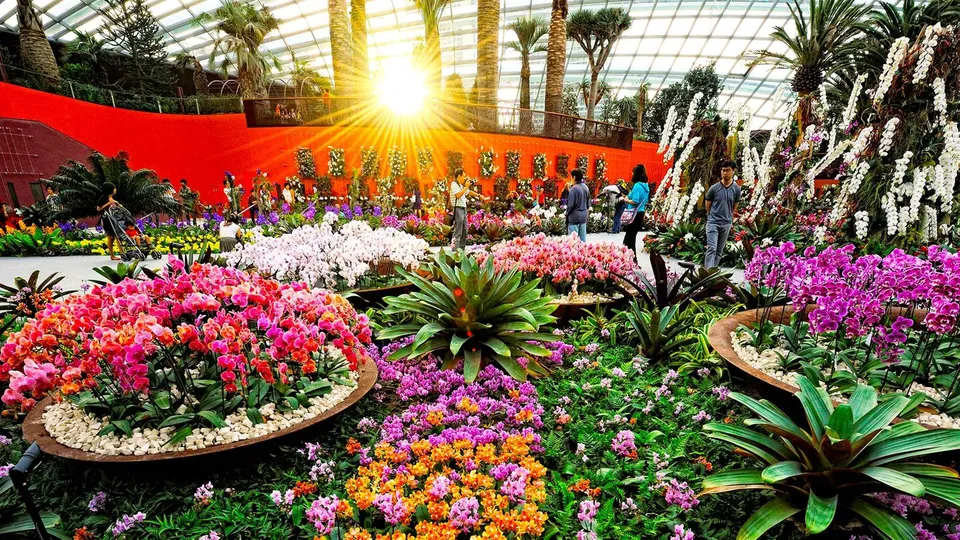
Day one: the centre. Kaya toast and kopi, then Chinatown and Tanjong Pagar while it is still cool, with lunch at Maxwell Food Centre. Spend the hot hours in the National Gallery or the shops. Walk Marina Bay at dusk, and read Gardens by the Bay, decoded before you pay for any part of it.
Day two: the old districts. Little India in the morning, for prata and the market; Kampong Glam after lunch, for the mosque and the fabric shops; Tiong Bahru in the evening for the market upstairs and a bar downstairs.
Day three: go east, like a resident. Laksa and shophouses in Katong and Joo Chiat, a bicycle along East Coast Park before the sun finds you, and dinner at one of the old food centres near the water. The East Coast guide has the rest, including the bumboat to Pulau Ubin.
After that, the weekend guide tells you what is actually on, the guides go deeper, and free things to do is for the day your budget notices the bar bill. You now know more than some people who live here.