Queenstown: The estate that came before the estates
Come for a morning walk rather than a meal: Singapore's oldest public library, ten-storey Chap Lau blocks and a market with a coffin-shaped roof, in an estate busy rebuilding itself.
Before Singapore had HDB towns it had Queenstown, and the estate has kept the receipts.
Queenstown is worth a morning if you like your history lived-in rather than behind glass, and less so if you need a headline attraction or a lunch plan, because it has neither. What it has is a run of firsts scattered between the void decks: the country's oldest public library, a market roof that once alarmed its own residents and blocks of flats worth crossing the island to look at (we know how that sounds). It also gives you a respectable excuse to sit in a library with the air-con on.
Best forHeritage WalksArchitecture and Housing NerdsLibrary AfternoonsRainy-Day Museum TripsNature on the Southern Ridges
The walk · A morning, about two to three hours
From the coffin-roof market to Chap Lau
Queenstown wet market
Start opposite Queenstown MRT at the two-storey SIT market, the last of its kind and gazetted for preservation. Look up at the roof, which some residents at first thought looked like a Chinese coffin.
Queenstown Library
Singapore's first branch library, opened in 1970 and still the oldest public library in the country. Time it for when the heat sets in: there is no better place in the estate to cool down and look studious.
Stirling Road
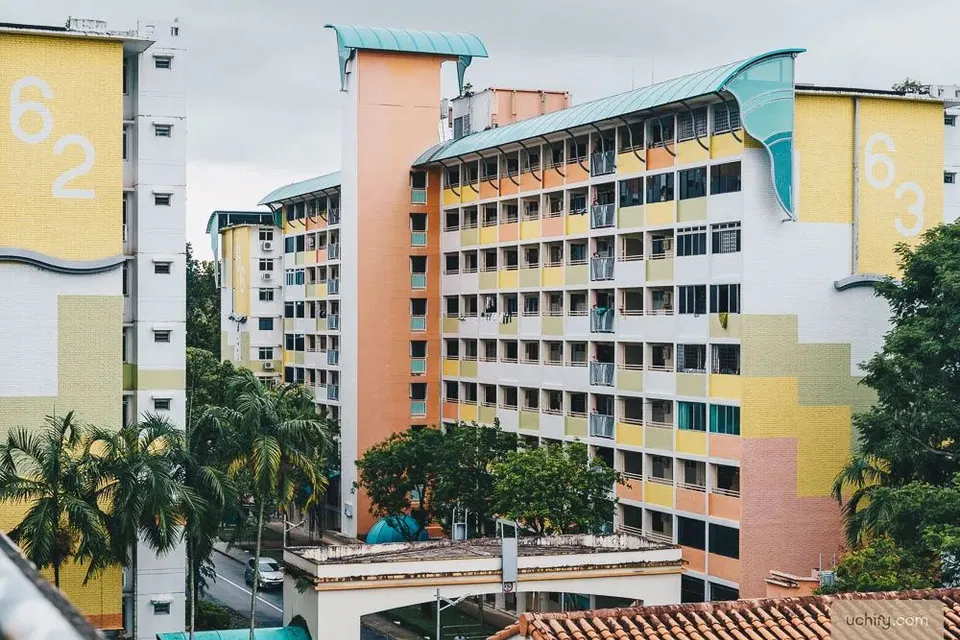
SIT terrace houses from the late 1950s share the street with Blocks 45, 48 and 49, built by HDB in the 1960s among Singapore's first high-rise homes. A whole chapter of housing history in one short stroll.
Margaret Drive
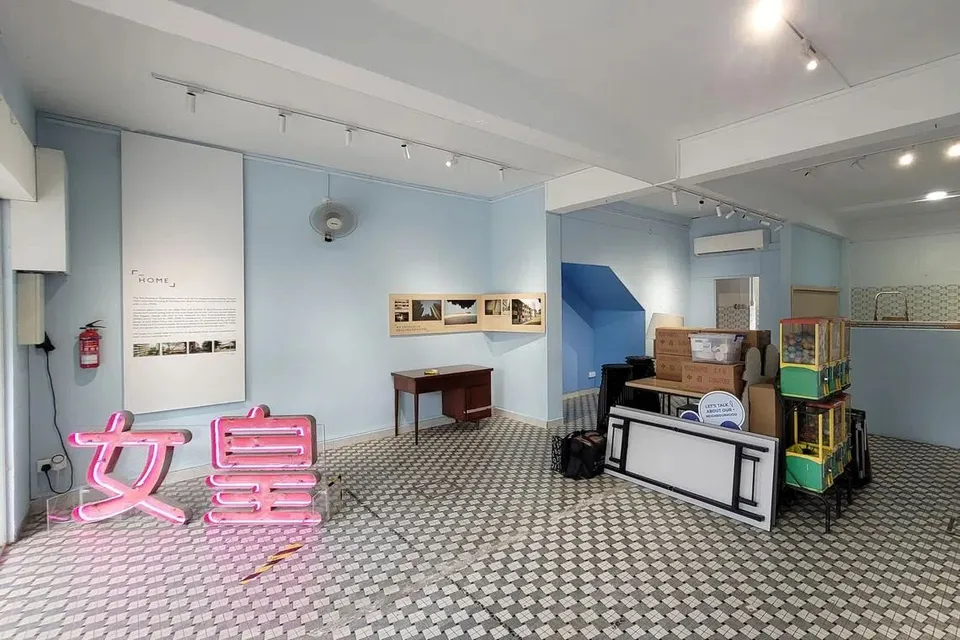
Look for the Museum @ My Queenstown at Block 30A, its planned new home after Tanglin Halt, where the estate's story is told through residents' own things. Check it is open before you detour.
Tanglin Halt and the Church of the Blessed Sacrament
Walk on to the church's blue tent roof and the Sri Muneeswaran Temple, which grew from shrines built by Malayan Railway workers. See what remains of Chap Lau, then finish at Commonwealth MRT.
What reviewers say
Look at the diagonal staircases on Tanglin Halt's blocks while they're still standing; the estate is being cleared in phases, and each visit there is less of it.
Don't skip Stirling Road. SIT terraces from the late 1950s and HDB's Blocks 45, 48 and 49 side by side are the clearest before-and-after of public housing you'll find in one street.
At the Tanglin Halt end, make the short detour to the Sri Muneeswaran Temple, which grew from shrines built by Malayan Railway workers – the same railway that gave Tanglin Halt its name.
Walk it one way, from the market at Queenstown MRT to Tanglin Halt, and finish at Commonwealth rather than doubling back in the sun.
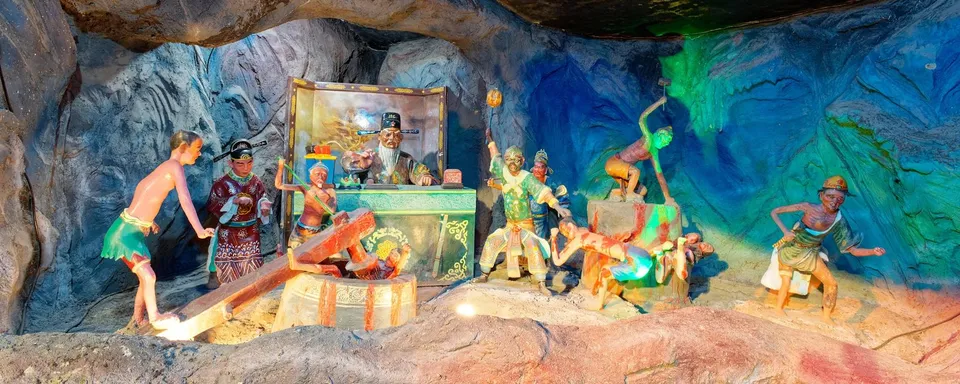
The Ten Courts of Hell, explained at last, inside a museum on death and the afterlife at Haw Par Villa. Not for under-9s; the rest of you will talk about it all the way home.
A volunteer-run museum of ordinary Queenstown life: biscuit tins, bowling pins, a rescued neon cinema sign and more than 6,000 items gathered before the bulldozers came to Tanglin Halt.
Where: Queenstown
Price: Free
The story of Queenstown
The story starts in a swampy valley of farms and a village called Boh Beh Kang, with a British military camp, Buller Camp, on the site until 1953. That year the Singapore Improvement Trust named its new estate after Queen Elizabeth II's coronation, and the first three-room flats were ready by the end of it. Princess Margaret Estate, named after the Queen's sister, was part of that first build, and in 1956 Forfar House rose 14 storeys to become the tallest public flat in Singapore. Toa Payoh would later become HDB's first new town; Queenstown, a colonial SIT project, simply got there first.
After that it collected firsts the way other estates collect bus stops. Queenstown Library opened in 1970 as Singapore's first branch library, launched by Lee Kuan Yew. The town centre, finished in 1969, had three cinemas and an 18-lane bowling centre, which tells you something about the priorities of the day. At Tanglin Halt, named after the trains that used to halt there, residents called the ten-storey blocks Chap Lau, Hokkien for 'ten storeys', with admirable economy. The Church of the Blessed Sacrament, completed in 1965 under a blue, tent-like roof, once kept a miniature zoo.
Go soon, because the place is changing. Tanglin Halt's blocks, markets and food centres are being cleared in phases for redevelopment, and the volunteer-run Museum @ My Queenstown has left its old shophouse there, with a bigger home planned on Margaret Drive. Bring a walking map rather than a dining list, and when you want a change of scene, HortPark and Hell's Museum at Haw Par Villa are close by.