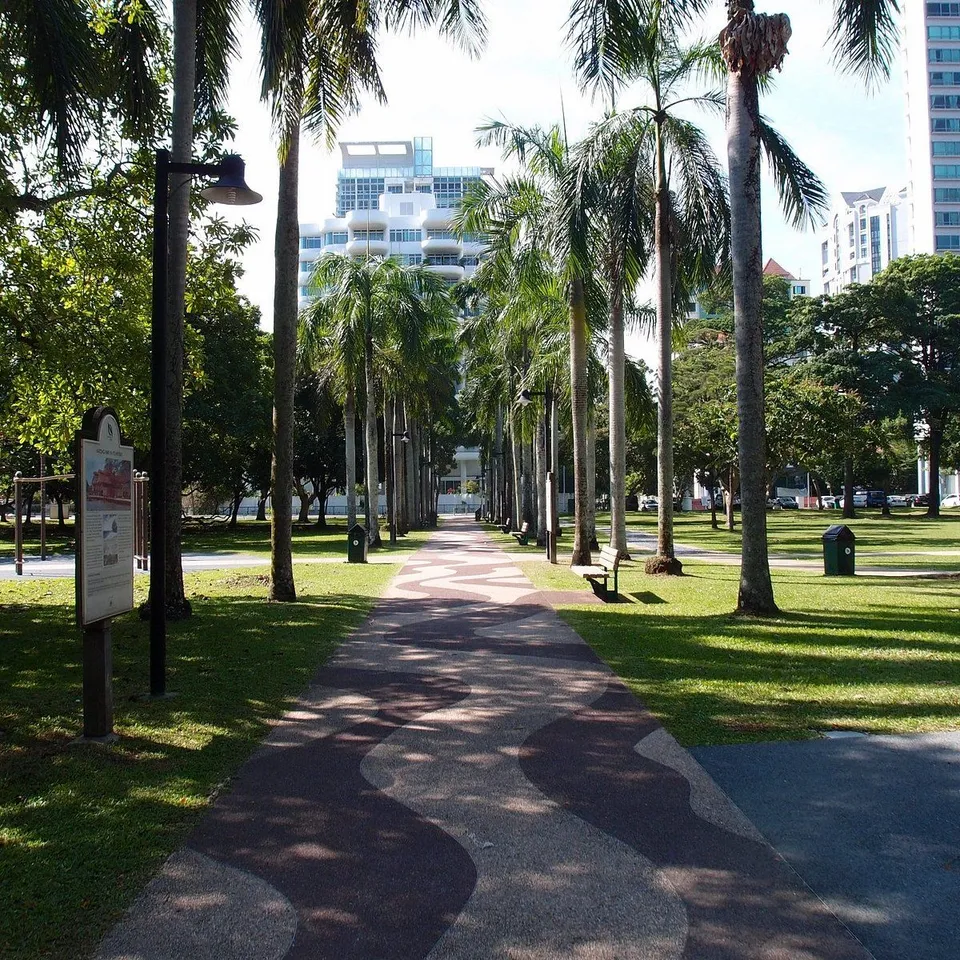
Katong Park
Katong Park: a buried Victorian fort under a dog-walking park
- Where
- Siglap & Tanjong Katong
- Hours
- Open 24 hours
- Price
- Public park, open 24 hours
The fort was nicknamed Wash-out Fort, its guns sat at sea level, and the British buried it. The dogs walk over it now.
Katong Park is the easiest half-hour of history in the east, and the right call for a dog walk or a coffee stroll with something to read on the way. Come for the excavated bastion, the painted guards and the rainbow tree; don't come for the playground just now, because it is closed for improvement works until 12 November 2026. Katong Park station, on the Thomson–East Coast Line since June 2024, puts you right there.
The clue is in the street name. Fort Tanjong Katong was built in 1879 by Henry Edward McCallum of the Royal Engineers to guard the eastern approach to the harbour, and it was never a success. It sat so low that its guns were at sea level, earning it the nickname "Wash-out Fort"; a tower built to raise the guns shook when they fired; and one gun burst in 1890. The British abandoned it in 1901 and buried it (one way to close a project).
The park came later, opening in 1931 as Singapore's first public sea-swimming enclosure, with a bandstand, changing rooms and a café, concerts and an annual sea carnival. Three bombs went off here in 1963 during Konfrontasi, injuring no one but smashing windows at a nearby hotel. Then the east coast reclamation that began in 1966 pushed the sea away, and the park lost its waterfront and most of its crowd. It was designated a historic site in 1998.
The fort's second act is the better story. A dry spell in 2001 exposed patches of rock, and Katong resident Jack Sim – better known as the founder of the World Toilet Organization – who had been looking for it since 1993, started digging into the history. Excavation began in October 2004, funded by a community appeal that raised S$200,000 in four weeks. More than 1,000 volunteers joined archaeologists over roughly ten months and found infantry bastions and a moat. NParks backfilled most of it in December 2005, and the leftover funds went to bursaries.
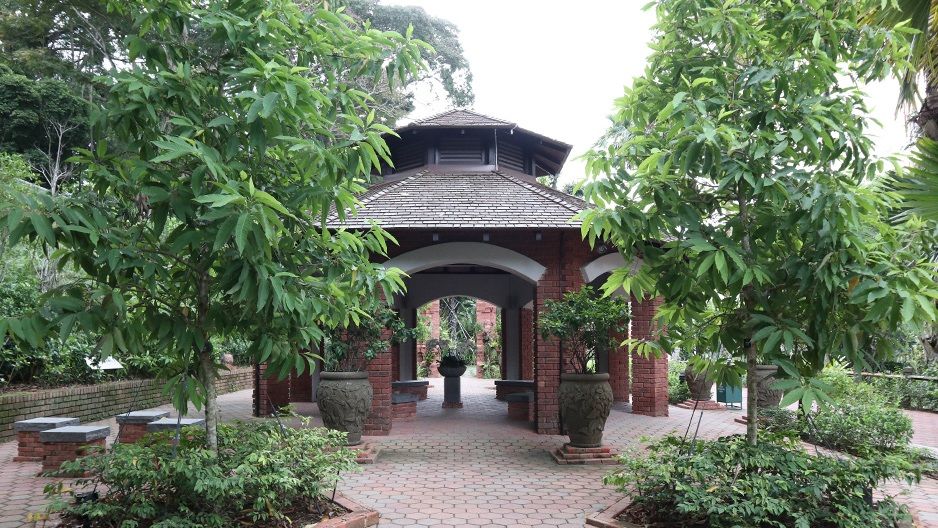
What you can see now is the South-East Bastion, an excavated section NParks describes as more than 140 years old, behind a cordon with signage explaining it. Near the Fort Road side stand the Katong Park Guards, brightly painted statues NParks describes as a pair of Sikh colonial guards. Then find the Mindanao gum, a heritage tree whose inner bark changes colour once exposed, which is why it is known as the rainbow tree. That is the half-hour.
The rest is a practical neighbourhood park: 4.12 hectares at the junction of Fort Road and Meyer Road, open round the clock, wheelchair accessible and pet-friendly, with plenty of dog walkers. Until the playground reopens, NParks suggests Arthur Park and Meyer Road Playground instead. Go early on a weekend, before the heat, with a coffee and the dog, and read the boards in order: fort, swimming enclosure, dig.
Good to know NParks lists the playground and adjacent footpath as closed for improvement works from 11 May to 12 Nov 2026 (Arthur Park and Meyer Road Playground are suggested alternatives). Nearest stations: Katong Park (TEL) and Mountbatten.
Katong Park | Junction of Fort Road and Meyer Road, Singapore
Plan your visit
- Where
- Junction of Fort Road and Meyer Road, Singapore
- Opening hours
- Open 24 hours
- Cost
- Public park, open 24 hours; no admission fee listed
- Good for
- A friend, A group, Myself
Details checked 11 October 2026.
- Katong Park · National Parks Board (NParks)
- Fort Tanjong Katong · Wikipedia
- Katong Park · Wikipedia
- Katong Park Guard Sculptures · Remember Singapore
- Fort Tanjong Katong, 10 years on · Southeast Asian Archaeology
Researched from the sources listed, not a first-hand review. Prices, hours and access can change — check the official site before you go.